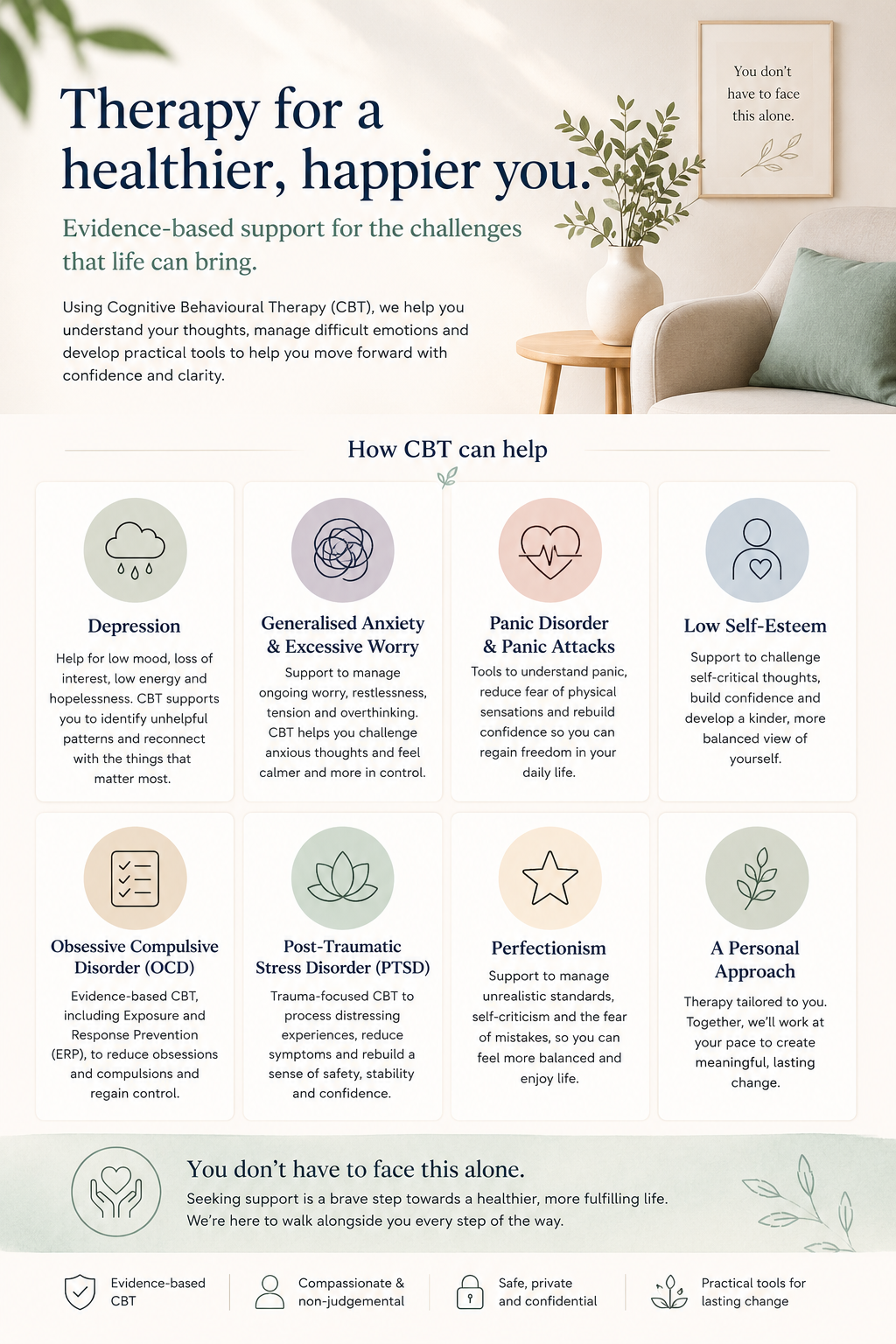
Disorders We Can Support You With
Life can sometimes feel overwhelming, especially when your thoughts, emotions, or behaviours begin to impact your confidence, relationships, work, or everyday wellbeing. At Melanie Talks, we understand that no two people experience mental health difficulties in exactly the same way. Through a compassionate, supportive, and evidence-based approach, Cognitive Behavioural Therapy (CBT) can help you better understand what you are experiencing and support you in making meaningful, lasting changes.
Whether you are struggling with anxiety, low mood, panic, trauma, or self-esteem, therapy can provide a safe and supportive space to explore what is happening and develop practical strategies to help you move forward with greater confidence and clarity.
Depression
Depression can affect every aspect of life, from your energy levels and motivation to your relationships and ability to enjoy everyday activities. Many people describe feeling persistently low, emotionally drained, hopeless, or disconnected from the things they once enjoyed. It can also affect sleep, concentration, appetite, and self-confidence.
CBT is a highly effective treatment for depression and focuses on helping you recognise the unhelpful thought patterns and behaviours that may be maintaining your low mood. Together, we work to develop healthier ways of thinking, improve coping strategies, rebuild confidence, and gradually help you reconnect with the things that matter most to you.
Generalised Anxiety and Excessive Worry
Generalised Anxiety Disorder (GAD) involves persistent and excessive worry that can feel difficult to control. Often, the mind becomes stuck in a cycle of “what if” thinking, leaving you feeling constantly on edge, restless, tense, or mentally exhausted.
CBT helps you understand the connection between anxious thoughts, physical sensations, emotions, and behaviours. By learning practical tools to challenge anxious thinking and manage worry differently, you can begin to feel calmer, more balanced, and more in control of your day-to-day life.
Panic Disorder and Panic Attacks
Panic attacks can feel frightening and overwhelming, often happening suddenly and without warning. Symptoms may include a racing heart, dizziness, breathlessness, shaking, chest tightness, or a fear of losing control. Over time, many people begin avoiding certain situations because they fear another panic attack occurring.
CBT is widely recognised as one of the most effective treatments for panic disorder. Therapy helps you understand what triggers panic, reduce fear around physical sensations, and gradually rebuild confidence through safe and manageable steps. The aim is to help you regain freedom and reduce the impact panic has on your life.
Low Self-Esteem
Low self-esteem can affect how you see yourself, how you relate to others, and the opportunities you allow yourself to pursue. You may find yourself constantly self-critical, doubting your abilities, comparing yourself to others, or struggling to accept praise and positive feedback.
Through CBT, we explore the underlying beliefs and experiences that may be contributing to low self-esteem. Together, we work on developing a more balanced and compassionate view of yourself, helping you build confidence, resilience, and a stronger sense of self-worth.
Obsessive Compulsive Disorder (OCD)
OCD involves distressing intrusive thoughts, images, or urges, alongside repetitive behaviours or mental rituals carried out to reduce anxiety. These compulsions can become exhausting, time-consuming, and difficult to manage, often impacting work, relationships, and daily routines.
CBT, particularly Exposure and Response Prevention (ERP), is considered one of the most effective treatments for OCD. Therapy supports you in gradually facing fears without relying on compulsive behaviours, helping to reduce anxiety over time and regain a greater sense of control.
Post-Traumatic Stress Disorder (PTSD)
PTSD can develop following a traumatic or deeply distressing experience. Symptoms may include flashbacks, nightmares, heightened anxiety, emotional numbness, avoidance, or feeling constantly alert and unsafe.
Trauma-focused CBT provides a supportive and structured approach to processing traumatic experiences safely. Therapy can help reduce the emotional impact of trauma, challenge unhelpful beliefs linked to the experience, and support you in rebuilding a sense of safety, stability, and confidence in everyday life.
Perfectionism
Perfectionism is more than simply wanting to do well. It often involves setting unrealistically high standards, fearing mistakes, and placing excessive pressure on yourself. This can lead to anxiety, burnout, procrastination, and feelings of never being “good enough”.
CBT helps identify the underlying beliefs driving perfectionism and supports you in developing a healthier, more flexible mindset. By learning to manage self-criticism and become more accepting of imperfection, you can reduce stress, improve wellbeing, and enjoy life with greater balance and self-compassion.
A Supportive and Collaborative Approach
At Melanie Talks, therapy is always tailored to you as an individual. CBT is not about “fixing” you. It is about helping you understand yourself better, develop practical tools, and create positive, sustainable change at a pace that feels right for you.
Seeking support can feel like a big step, but it is often the beginning of meaningful progress, growth, and emotional wellbeing.